Contents
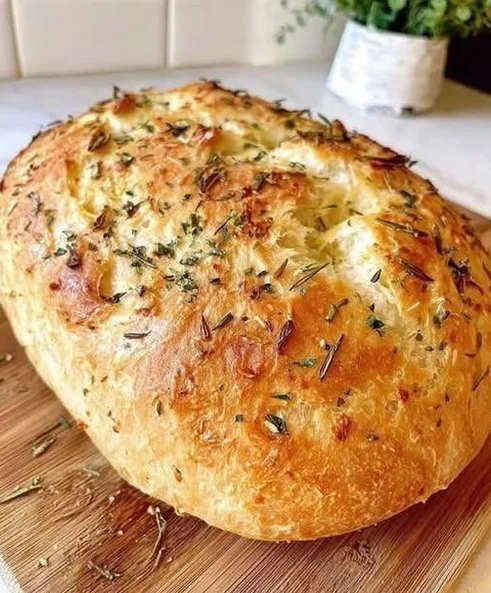
A rustic artisan sourdough bread packed with mellow roasted garlic and fragrant fresh rosemary. The naturally fermented dough develops a flavorful interior and a deep, crackly brown crust after baking in a preheated Dutch oven. This savory homemade sourdough is ideal for serving alongside soups, salads, pasta, roasted meats, or simply enjoying warm with your favorite spread.
Prep time1 hour
Cook time45 min
Total time1 day 2 hours 45 min
Servings16, 16 servings
CourseBread, Side Dish
CuisineAmerican
Ingredients
- 35 grams ripe sourdough starter
- 35 grams bread flour
- 35 grams water
- 3 bulbs garlic
- Olive oil, for drizzling
- Salt, for sprinkling
- 100 grams ripe, bubbly, peaked levain
- 450 grams bread flou
- 50 grams whole wheat flour
- 375 grams water, divided, with 25 grams reserved for after the fermentolyse
- 10 grams salt, reserved for after the fermentolyse
- All of the roasted garlic, cooled to room temperature
- 1–2 sprigs fresh rosemary, chopped
Advertisement
Instructions
- Combine the ripe sourdough starter, bread flour, and water in a suitable container. Cover loosely and leave the mixture for approximately 3–4 hours at 78°F. The levain is ready when it has doubled, looks bubbly, and reaches its peak. An active sourdough starter fed with equal weights of flour and water can also be used as a substitute.
- While the levain develops, prepare the garlic. Preheat the oven to 400°F. Remove excess outer skin from the three garlic bulbs and slice approximately ½ inch from the tops so the cloves are exposed. Place the bulbs on aluminum foil, drizzle with olive oil, and add a small sprinkle of salt. Wrap the garlic completely in the foil and place it in a baking dish. Roast for 30–40 minutes, until the cloves are very soft and caramelized.
- Remove the roasted garlic from the oven and allow it to cool completely. Squeeze the softened cloves from the bottom of each bulb into a container, then mash them with a fork. Set the roasted garlic aside until it is needed for the dough. The garlic can also be prepared one or two days ahead and refrigerated until ready to use.
- When the levain is bubbly, doubled, and ready, combine 100 grams of levain, 350 grams of water, 450 grams of bread flour, and 50 grams of whole wheat flour. Mix these ingredients together and allow the mixture to rest for 30 minutes. The dough temperature can be managed by adjusting the water temperature according to the temperature of the other ingredients.
- After the 30-minute rest, add the 10 grams of salt and the remaining 25 grams of water. Work the mixture by squeezing the dough between your fingers, pinching pieces together, and folding the dough over itself. Continue until the salt and additional water are fully incorporated. Transfer the dough to a plastic container or glass bowl and cover it.
- During the next two hours, perform a series of stretch-and-fold sessions to strengthen the dough. Wet your hand to prevent sticking, reach underneath the dough, stretch it upward, and fold it over itself. Rotate the bowl and repeat the movement around the dough. Allow approximately 30 minutes between each stretch and fold.
- Remove the rosemary leaves from their stems and finely chop them. During the second stretch-and-fold session, place the roasted garlic over the dough and sprinkle the chopped rosemary across the surface. Fold the dough to incorporate the ingredients. During the following stretch and fold, continue incorporating the garlic and rosemary so they become distributed throughout the dough.
- After the stretch-and-fold stages, cover the dough and let it continue rising for approximately 1½–2 hours. Look for a puffed appearance, visible bubbles, and a gentle jiggle when the bowl is moved. The dough does not need to double in size; an increase of approximately 30–40% is an indication that it may be ready for shaping.
- Gently turn the fermented dough onto a clean counter. Use wet hands and a bench knife if necessary. Work around the dough, tucking it underneath itself to create a round shape and introduce surface tension. Handle it gently so that as much of the fermentation-developed structure as possible is retained. If roasted garlic appears on the outside, move it underneath the dough.
- Leave the pre-shaped dough uncovered for approximately 30 minutes at room temperature. It may flatten during this period, which allows the gluten to relax and prepares the dough for its final shaping.
- Prepare a bowl or banneton with a kitchen towel or hair net and flour it as needed. Lightly flour the dough, then use a bench knife to lift it and place it floured-side down. Pull the dough sideways toward yourself and fold it toward the top. Continue around the dough, repeating the movement while gradually creating more tension. Place the shaped loaf into the prepared bowl. Remove any roasted garlic pieces that remain exposed on the surface to help prevent burning during baking.
- Cover the shaped dough with a tea towel, shower cap, or plastic wrap and refrigerate it overnight for approximately 12–20 hours. For a same-day bake, allow the shaped dough to rise for approximately 3–4 hours until it looks puffed and risen before proceeding to baking.
- Place the Dutch oven, including its lid, inside the oven. Preheat to 500°F for 30 minutes. Because the cookware becomes extremely hot, use appropriate heat protection when handling it. Remove the dough from the refrigerator while the Dutch oven is fully preheated.
- Place parchment paper over the chilled dough and carefully flip it so the dough rests on the parchment. Remove the bowl or banneton and kitchen towel. Score the top using a very sharp knife or bread lame, making a shallow cut approximately 1 inch deep. Scoring the dough while it is still cold helps make this step easier.
- Carefully remove the preheated Dutch oven from the oven. Transfer the dough, along with the parchment paper, into the Dutch oven. Cover with the lid and return it to the oven. Reduce the temperature to 450°F and bake covered for 25 minutes. Remove the lid and continue baking for approximately 20 minutes, or until the loaf develops a deep brown, crackly crust. Remove the bread from the Dutch oven and allow it to cool before serving.
Advertisement
Nutrition
Calories: 118 cal · Carbohydrates: 24 g · Protein: 4 g · Fat: 1 g · Fiber: 1 g · Sugar: 0.1 g
Advertisement