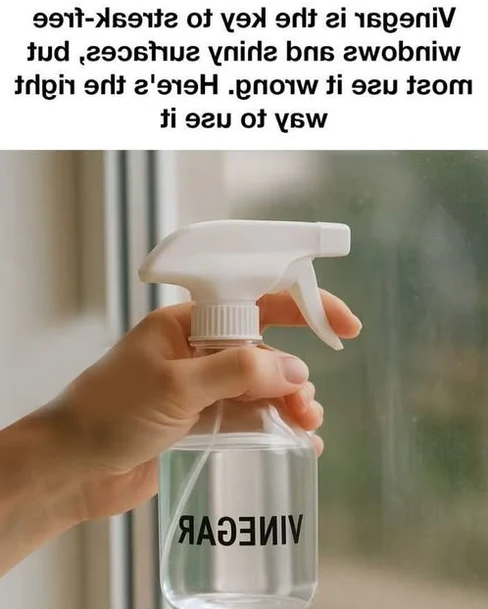
Vinegar is a versatile and effective cleaning agent due to its natural acidity, which helps dissolve mineral deposits, grease, and grime. This guide explains the correct way to prepare and apply vinegar to achieve streak-free windows and shiny surfaces while avoiding common mistakes.
Equipment
- Spray bottle
- Microfiber cloths
- Squeegee
Ingredients
- 1 cup distilled white vinegar (at least 5% acetic acid)
- 1 cup water
Advertisement
Instructions
- Mix equal parts distilled white vinegar and water in a spray bottle (e.g., 1 cup vinegar and 1 cup water).
- Dust the window surface with a dry microfiber cloth to remove loose dirt and debris.
- Spray the vinegar and water solution onto the window, covering the entire surface evenly.
- Use a clean microfiber cloth to wipe the window in a circular motion, loosening any dirt and grime.
- Use a squeegee to remove the solution from the window, starting at the top and working your way down. Wipe the squeegee blade with a cloth after each pass.
- Finish by wiping the edges of the window with a clean, dry microfiber cloth to remove any remaining moisture.
Advertisement
Notes
For stubborn grime, use a 2:1 ratio of vinegar to water. Do not use on natural stone (granite/marble), electronic screens, or waxed surfaces. Avoid mixing vinegar with bleach or hydrogen peroxide. For stainless steel, wipe following the grain. For bathroom fixtures, let the solution sit for a few minutes before wiping.
Advertisement