Contents
EquipmentIngredientsIngredientsEquipmentInstructionsStep 1: Acclimation and Fruit SelectionStep 2: The Core and the CutStep 3: Plating & ArrangementStep 4: Pepper Application (First Layer)Step 5: Salting (The Osmotic Stage)Step 6: The Rest (Intensity Modulation)Step 7: Final Flourish (Optional)Nutrition
Prep time5 minutes
Total time12 minutes
Equipment
- Tomatoes: 3 large or 4 medium ripe heirloom or vine-ripened beefsteak tomatoes (approx. 700g total). Look for varieties such as Cherokee Purple, Brandywine, or Green Zebra for balance across sweetness and acidity.
- Salt: 1.5 teaspoons (approx. 4g) flaky finishing sea salt (such as Maldon or Fleur de Sel). Avoid table salt or fine iodized salt, which penetrates too quickly and lacks textural crunch.
- Black Pepper: 1 teaspoon whole tellicherry or Malabar black peppercorns, coarsely cracked in a mortar and pestle or set to the widest dial on an adjustable pepper mill.
- Extra-Virgin Olive Oil (Optional Finishing Element): 1.5 tablespoons (22ml) cold-pressed, robust, peppery olive oil (preferably harvested from Tuscan or Sicilian olives).
- Fresh Herb Accent (Optional): 4 to 6 small fresh basil leaves or torn purple opal basil.
- A sharp scalloped/serrated tomato knife or a freshly honed 8-inch chef’s knife.
- End-grain wooden cutting board (avoids crushing soft fruit tissues).
- Wide, shallow ceramic or stoneware serving platter.
- Mortar and pestle or coarse-burr spice grinder.
Ingredients
Ingredients
- Tomatoes: 3 large or 4 medium ripe heirloom or vine-ripened beefsteak tomatoes (approx. 700g total). Look for varieties such as Cherokee Purple, Brandywine, or Green Zebra for balance across sweetness and acidity.
- Salt: 1.5 teaspoons (approx. 4g) flaky finishing sea salt (such as Maldon or Fleur de Sel). Avoid table salt or fine iodized salt, which penetrates too quickly and lacks textural crunch.
- Black Pepper: 1 teaspoon whole tellicherry or Malabar black peppercorns, coarsely cracked in a mortar and pestle or set to the widest dial on an adjustable pepper mill.
- Extra-Virgin Olive Oil (Optional Finishing Element): 1.5 tablespoons (22ml) cold-pressed, robust, peppery olive oil (preferably harvested from Tuscan or Sicilian olives).
- Fresh Herb Accent (Optional): 4 to 6 small fresh basil leaves or torn purple opal basil.
Equipment
- A sharp scalloped/serrated tomato knife or a freshly honed 8-inch chef’s knife.
- End-grain wooden cutting board (avoids crushing soft fruit tissues).
- Wide, shallow ceramic or stoneware serving platter.
- Mortar and pestle or coarse-burr spice grinder.
Advertisement
Instructions
Step 1: Acclimation and Fruit Selection
- Ensure the tomatoes are completely at room temperature (ideally between 20°C and 22°C / 68°F and 72°F). Tomatoes stored in the refrigerator suffer membrane disruption, leading to mealy flesh and suppressed volatile aromatic esters. If the tomatoes were chilled, let them sit on the counter for at least 2 hours prior to slicing.
Step 2: The Core and the Cut
- Wash each tomato under gentle, cool running water and pat thoroughly dry using a lint-free kitchen towel. Moisture on the skin will dilute the seasoning and cause the oil to bead unpleasantly.
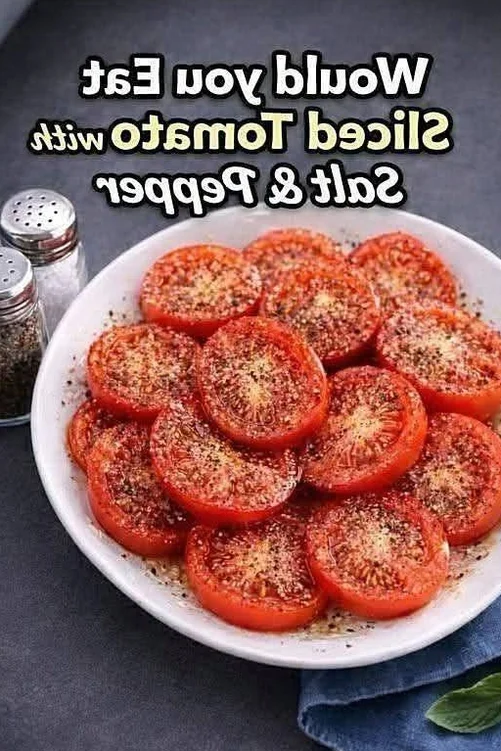
- Place the tomato on its side on your cutting board. Using a very sharp serrated knife, slice off the stem end by roughly 5 mm to expose a flat, level surface. Slice crosswise through the equator of the fruit into clean rounds measuring approximately 8 mm to 10 mm (roughly 1/3 inch) thick.
- Chef’s Note: Cutting horizontally along the equator rather than vertically stem-to-blossom opens the locular cavities evenly, exposing both the fleshy pericarp and the umami-rich jelly (locular gel) surrounding the seeds. Do not slice too thin, or the slices will turn mushy once salted.
Step 3: Plating & Arrangement
- Select a broad, rimmed ceramic platter. Arrange the tomato slices in a single layer with slight overlaps (a 15% overlap shingle pattern works best). Arranging them in a single layer ensures that every single cut surface receives direct contact with seasoning, rather than trapping unseasoned surfaces underneath.
Step 4: Pepper Application (First Layer)
- Crack the peppercorns coarsely. Apply half of the cracked pepper directly onto the bare, moist tomato surface before applying the salt. Allowing the cracked piperine to adhere directly to the natural fats and moisture of the exposed flesh anchors the spice note deep into the fruit.
Step 5: Salting (The Osmotic Stage)
- Pinch the flaky sea salt between your thumb, index, and middle finger. Hold your hand approximately 10 to 12 inches above the platter to ensure an even scatter rather than concentrated clusters. Sprinkle the flakes evenly across all exposed surfaces.
Step 6: The Rest (Intensity Modulation)
- Allow the seasoned tomatoes to rest undisturbed at room temperature for 7 minutes.
- During this rest, the salt crystals will draw out a small portion of intracellular water through osmosis. This water dissolves a portion of the salt and blends with the glutamic acid in the tomato jelly, creating a rich, savory, natural dressing that pools lightly on the platter. The thicker flakes will partially retain their crunch.
Step 7: Final Flourish (Optional)
- If using olive oil, drizzle it in a thin, continuous spiral across the platter. Scatter the remaining coarse pepper over the top for dry textural crunch, and garnish with gently torn basil leaves. Serve immediately with crusty sourdough bread to sponge up the juices.
Advertisement
Nutrition
Calories: 32 kcal 2% · Protein: 1.6 g 3% · Fat: 0.4 g 1% · Carbohydrates: 6.9 g 3% Dietary · Saturated Fat: 0.1 g 0% · Fiber: 2.2 g 8% · Sugar: 4.6 g — Added · Sodium: 390 mg 17%
Advertisement