Contents
EquipmentIngredientsDry IngredientsWet IngredientsFlavor Add-insOptional EnhancementsInstructions1. Mixing the Dough (15 minutes)2. First Fermentation (12–18 hours, low intensity)3. Shaping the Dough (10 minutes)4. Preheating the Oven (Medium intensity step)5. Baking the Bread (40–45 minutes total)Baking stages:6. Cooling (High patience intensity)Nutrition
Prep time15–20 minutes Bake Time: 40–45 minutes
Equipment
- Large mixing bowl
- Wooden spoon or spatula
- Plastic wrap or clean kitchen towel
- Dutch oven or heavy oven-safe pot with lid
- Parchment paper
Ingredients
Dry Ingredients
- 3 ¼ cups (400g) all-purpose flour or bread flour
- 1 ½ teaspoons salt
- ½ teaspoon instant yeast
Wet Ingredients
- 1 ½ cups (360ml) lukewarm water
Flavor Add-ins
- 4–6 cloves garlic (roasted or finely minced for stronger flavor)
- 1–2 tablespoons fresh rosemary, finely chopped (or 1 tablespoon dried rosemary)
- 1 tablespoon olive oil (optional, for richer texture)
Optional Enhancements
- Cornmeal or flour for dusting
- Extra rosemary for topping
- Sea salt flakes for crust finishing
Advertisement
Instructions
1. Mixing the Dough (15 minutes)
- In a large bowl, combine the flour, salt, and yeast. Stir gently to distribute the ingredients evenly. Add the lukewarm water and mix using a wooden spoon until a shaggy, sticky dough forms. The dough should look rough and slightly wet—this is normal and essential for a no-knead bread.
- Add the minced garlic and chopped rosemary, folding them into the dough until evenly distributed. Do not overmix; the goal is incorporation, not kneading.
2. First Fermentation (12–18 hours, low intensity)
- Cover the bowl with plastic wrap or a damp towel. Let the dough rest at room temperature for 12 to 18 hours. This long fermentation is what builds flavor and structure without kneading.
- What to expect:
- Dough will double in size
- Surface will become bubbly
- Aroma will develop a slightly tangy, yeasty smell
- This stage requires no active work, only patience.
3. Shaping the Dough (10 minutes)
- Lightly flour a clean surface. Gently tip the dough onto it. Avoid punching it down aggressively—you want to preserve the air pockets created during fermentation.
- With floured hands, fold the dough over itself 2–3 times to form a rough round loaf. Do not aim for perfection; rustic shape is ideal.
- Place the dough onto parchment paper and let it rest for 30–45 minutes for a second, shorter rise.
4. Preheating the Oven (Medium intensity step)
- Place your Dutch oven (with lid) into the oven and preheat to 230°C (450°F). Let it heat for at least 30 minutes.
- This step is crucial because the high heat and enclosed environment create steam, giving the bread its signature crusty exterior.
5. Baking the Bread (40–45 minutes total)
- Carefully remove the hot Dutch oven. Lift the dough using parchment paper and place it inside.
Baking stages:
- Covered baking: 30 minutes
- Uncovered baking: 10–15 minutes
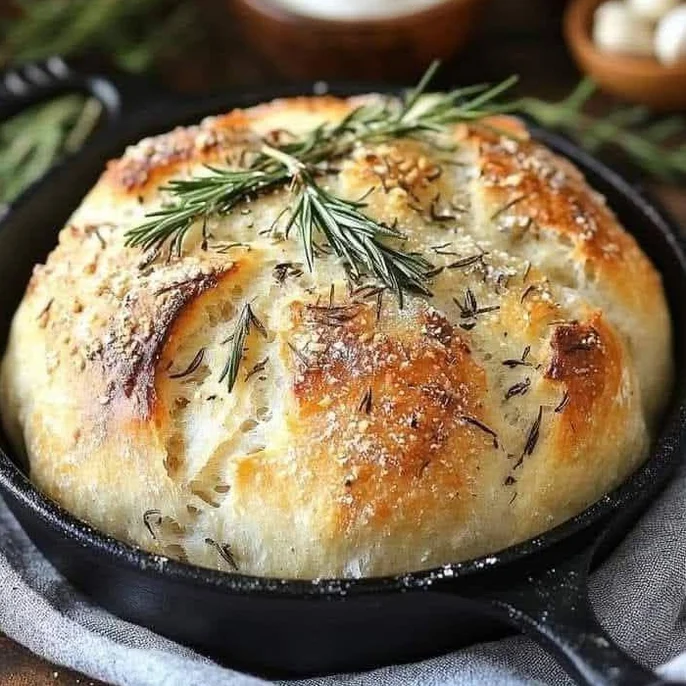
- During covered baking, steam helps the bread rise. During uncovered baking, the crust develops its deep golden-brown color.
- If desired, brush the top lightly with olive oil and sprinkle rosemary or sea salt before the final 10 minutes.
6. Cooling (High patience intensity)
- Remove the bread from the pot and place it on a cooling rack. Allow it to cool for at least 1 hour before slicing.
- This step is often overlooked but essential. Cutting too early will release steam and make the bread gummy inside.
Advertisement
Nutrition
Calories: 160–180 kcal · Protein: 5g · Fat: 2–3g · Carbohydrates: 32g · Fiber: 1–2g · Sodium: 250–300mg
Advertisement