Contents
Prep time7 minutes Washing, trimming, and chopping stalks Extraction Time 3–5 minutes Machine run-time
Total time10–12 minutes Ready to sip
Servings1
Equipment
- Cold-Press (Masticating) Juicer OR High-Powered Blender (e.g., Vitamix, Blendtec, Ninja)
- Nut Milk Bag or Fine Mesh Cheesecloth (only if using the blender method)
- Large Produce Wash Basin or Colander
- Chef’s Knife & Cutting Board
- 16–20 oz Glass Tumbler (glass or stainless steel preferred to avoid chemical interaction)
Ingredients
Core Recipe (Pure Version)
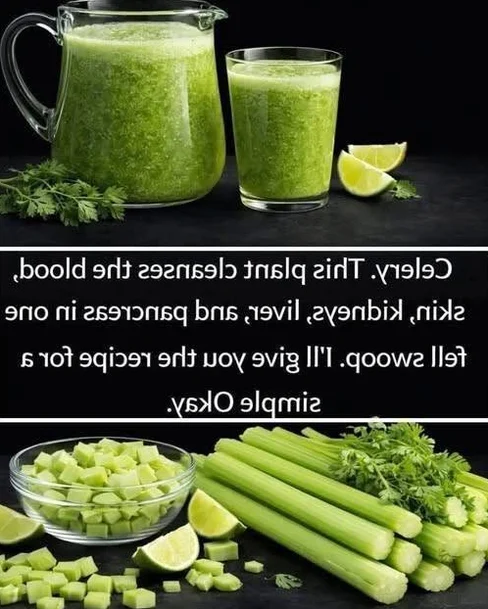
- 1 large bunch fresh organic celery (approx. 9–12 large stalks, roughly 450–500g)
Optional Palate Adjusters (For Beginners)
- 1/2 green Granny Smith apple (adds mild tart sweetness without spiking glycemic load)
- 1/2 fresh lemon , peeled (cuts through the grassy undertone with bright citric acid)
- 1/2-inch knob fresh ginger root (adds warming spice and gastrointestinal comfort)
Advertisement
Instructions
1. Preparation & Decontamination
- Separate the bunch: Cut off the fibrous root base roughly 1 inch from the bottom so individual ribs separate freely.
- Wash thoroughly: Celery grows in sandy, damp soil that frequently settles in the inner curves near the base. Soak stalks in cold water with 1 tablespoon of baking soda or apple cider vinegar for 2 minutes, then rinse every rib under running water.
- Inspect the foliage: You can juice the inner pale yellow-green leaves, but trim away dark, outer overgrown leaves if you are sensitive to bitterness, as mature leaves carry high concentrations of bitter tannins.
2. Extraction: Method A (Masticating / Cold-Press Juicer)
- Cold-press mastication crushes cell walls at low RPMs (typically 40–80 RPM), reducing heat build-up and oxidation.
- Cut stalks into 2-to-3-inch segments to keep long stringy celery fibers from tangling around the auger.
- Power on the juicer and feed segments steadily down the chute.
- Allow the machine to process each batch before inserting more to avoid backpressure.
- Catch the vibrant green juice in a glass pitcher.
3. Extraction: Method B (High-Speed Blender & Nut Milk Bag)
- If you do not own a specialized juicer, blending and straining yields an equally clean juice.
- Chop stalks into small 1-inch pieces to help the blades catch without burning the motor.
- Add the chopped celery to your blender pitcher along with 2 to 3 tablespoons of cold filtered water simply to lubricate the base blades.
- Start on low speed, using your blender tamper to press the celery down into the blades until liquid forms at the bottom.
- Increase intensity to High for 30–45 seconds . Avoid blending longer than 60 seconds to prevent motor heat from oxidizing delicate enzymes.
- Place a fine nylon nut milk bag over a clean bowl. Pour the puréed slurry into the bag.
- Twist the top closed and firmly squeeze downward with your hands, pressing out every drop of juice until only bone-dry fibrous cake remains in the bag. Discard or compost the pulp.
4. Serving & The Last of the Recipe
- Pour immediately: Pour the finished juice into a cold glass tumbler.
- Consume fresh: Drink within 15 minutes of extraction for optimal nutrient retention and cellular hydration. If stored, seal it in an airtight amber or clear mason jar filled completely to the brim (minimizing headspace oxygen) and refrigerate for no more than 24 hours.
- Clean up promptly: Rinse your juicer screen or nut milk bag under running tap water immediately; dried celery pulp adheres stubbornly like glue once dehydrated.
Advertisement
Nutrition
Calories: 42 kcal 2% · Protein: 2.1 g 4% · Fat: 0.4 g 0% · Carbohydrates: 9.0 g 3% Dietary · Fiber: (strained juice) 1.0 g 4% · Sugar: 4.2 g Naturally occurring · Sodium: 215 mg 9%
Advertisement