Contents
IngredientsFor the Soup BaseFor the VegetablesFor a Chicken VersionFor the Thickening MixtureFor GarnishingInstructionsStep 2: Heat the Oil and Build the Aromatic BaseStep 3: Add the MushroomsStep 4: Pour in the BrothStep 5: Add the Carrots and Firm VegetablesStep 6: Add the Chicken, If UsingStep 7: Season the BrothStep 8: Adjust the SournessStep 9: Add the Cabbage and Other Tender VegetablesStep 10: Thicken the SoupStep 11: Prepare the Egg RibbonsStep 12: Finish with Sesame Oil and Spring OnionsStep 13: Serve the Sour SoupNutrition
Prep timeared with vegetables, chicken, mushrooms, tofu, noodles, or a combination of ingredients. Some versions are light and refreshing, while others are rich, hearty, spicy, and full of texture. This homemade sour soup recipe focuses on creating a beautifully balanced broth with a pleasant sour flavor, gentle heat, fresh vegetables, and tender ingredients. The recipe is inspired by the flavors of hot and sour soup, a popular Chinese-style soup that combines vinegar, soy sauce, mushrooms, vegetables, and seasonings to create a satisfying dish. The best part about making sour soup at home is that you can adjust the sourness, spice level, thickness, and ingredients according to your personal preferences. You can make it vegetarian, add chicken for extra substance, include noodles for a more filling meal, or keep it simple for a light starter. Understanding the Flavor of Sour Soup A good sour soup should taste balanced rather than overwhelmingly acidic. The sourness should be noticeable, but it should work together with the savory broth, vegetables, seasonings, and spices. Vinegar is one of the most common ingredients used to create the characteristic sour flavor. Rice vinegar is particularly suitable for Chinese-style hot and sour soup because it provides a clean, gentle acidity. White vinegar can also be used, although it often has a sharper taste. Apple cider vinegar is another option when you want a slightly fruity flavor. Soy sauce adds saltiness and depth, while mushrooms contribute an earthy, savory quality. Garlic and ginger create a fragrant foundation, and white pepper provides warmth without requiring large amounts of chili. Cornstarch can be used to thicken the broth slightly, giving the soup a smooth texture. Beaten egg can also be stirred into the hot broth to create delicate ribbons, although eggs are optional. The secret is to add the sour ingredients gradually. Different vinegars vary in strength, so tasting the soup as you
Cook time25–35 minutes
Total timeApproximately 45–60 minutes
ServingsPreparation time: 20–25 minutes
Ingredients
For the Soup Base
- 6 cups chicken broth or vegetable broth
- 1 tablespoon cooking oil
- 4 cloves garlic, finely minced
- 1 tablespoon freshly grated ginger
- 1 small onion, finely sliced
- 2 tablespoons soy sauce
- 3–4 tablespoons rice vinegar, adjusted to taste
- 1 tablespoon chili sauce, optional
- ½ teaspoon ground white pepper
- ¼ teaspoon black pepper
- Salt, as needed
- 1 teaspoon sesame oil, optional
For the Vegetables
- 1 cup shredded cabbage
- 1 medium carrot, cut into thin strips
- 1 cup mushrooms, thinly sliced
- ½ cup finely sliced bell pepper
- ½ cup chopped spring onions
- ½ cup bean sprouts, optional
- ½ cup bamboo shoots, optional
- ½ cup chopped spinach, optional
For a Chicken Version
- 1 cup cooked chicken breast, shredded
- ½ teaspoon soy sauce for seasoning the chicken
- A small pinch of black pepper
For the Thickening Mixture
- 2 tablespoons cornstarch
- 4 tablespoons cold water
For Garnishing
- 2 tablespoons chopped spring onions
- 1 teaspoon sesame oil, optional
- A small pinch of white pepper
- A little fresh coriander, optional
- Extra vinegar or chili sauce, served separately
Advertisement
Instructions
Step 2: Heat the Oil and Build the Aromatic Base
- Place a large pot over medium heat and add one tablespoon of cooking oil.
- Allow the oil to warm for a few seconds, then add the minced garlic, grated ginger, and sliced onion.
- Cook the ingredients for approximately two to three minutes, stirring regularly.
- The garlic should become fragrant without turning dark brown. Burnt garlic can introduce a bitter taste that is difficult to correct later.
- The ginger should release its fresh, warm aroma, while the onion begins to soften and become slightly translucent.
- This stage establishes the foundation of the soup. Although the broth will later contain vinegar and other strong seasonings, the aromatic base ensures that the finished dish tastes rounded and flavorful rather than simply sour.
- If the mixture begins sticking to the bottom of the pot, reduce the heat slightly and add a small splash of broth.
Step 3: Add the Mushrooms
- Add the sliced mushrooms to the pot and stir them with the garlic, ginger, and onion.
- Cook for approximately three to five minutes.
- During this time, the mushrooms will begin releasing moisture and developing a deeper flavor. Their natural savory taste is particularly valuable in sour soup because it balances the acidity of the vinegar.
- Allowing the mushrooms to cook briefly before adding the broth also helps their flavor become more concentrated.
- If you are using several mushroom varieties, such as button mushrooms and shiitake mushrooms, you can combine them. Button mushrooms provide a mild, familiar flavor, while shiitake mushrooms have a more pronounced earthy taste.
- Fresh mushrooms are convenient, but dried mushrooms can also be used if they have been properly rehydrated according to their package instructions.
Step 4: Pour in the Broth
- Slowly pour six cups of chicken broth or vegetable broth into the pot.
- Stir thoroughly to combine the broth with the aromatic ingredients and mushrooms.
- Increase the heat slightly and bring the liquid to a gentle boil. Once it begins boiling, reduce the heat to medium-low.
- Allow the broth to simmer for approximately five minutes.
- A gentle simmer is preferable to an aggressive boil because it gives the ingredients time to release their flavors without causing unnecessary evaporation.
- If you are using homemade broth, make sure it is properly seasoned. Commercial broth may already contain a substantial amount of salt, so it is best to wait before adding extra salt.
- At this point, the soup should smell fragrant and savory, with the mushrooms and aromatics beginning to flavor the liquid.
Step 5: Add the Carrots and Firm Vegetables
- Add the carrot strips, bamboo shoots if using, and bell pepper to the simmering broth.
- Cook for approximately four to six minutes, depending on how thinly the vegetables have been sliced.
- The carrots should become tender but retain a little texture. The bell pepper should soften slightly without becoming completely mushy.
- If you enjoy vegetables that remain crisp, reduce the cooking time. If you prefer a softer soup, allow the vegetables to simmer a little longer.
- Add the shredded cabbage after the firmer vegetables have had a few minutes to cook.
- Stir everything together so that the vegetables are evenly distributed throughout the broth.
- This combination creates a pleasant contrast between the soft mushrooms, tender carrots, and slightly crisp cabbage.
Step 6: Add the Chicken, If Using
- If you are preparing chicken sour soup, add the shredded cooked chicken now.
- Stir the chicken into the broth and allow it to heat thoroughly for approximately three to five minutes.
- Using already cooked chicken is convenient and reduces preparation time. Leftover cooked chicken can be suitable if it has been refrigerated promptly and handled safely.
- If you are starting with raw chicken, cook it completely before shredding it, or simmer it in the broth until it is fully cooked. The center should reach 74°C (165°F).
- Do not rely on the outside color of chicken alone to determine whether it is safe to eat.
- For a vegetarian version, simply skip this step. The mushrooms, vegetables, broth, and seasonings will still create a flavorful soup.
Step 7: Season the Broth
- Add two tablespoons of soy sauce, three tablespoons of rice vinegar, half a teaspoon of white pepper, and a small amount of black pepper.
- If you like spicy soup, add one teaspoon of chili sauce and increase it later if necessary.
- Stir thoroughly and let the soup simmer for two to three minutes.
- Taste a small spoonful once it has cooled enough to sample safely.
- The soup should have a clear savory flavor with a noticeable sour finish. If the broth tastes too mild, add a little more vinegar. If it tastes too sharp, add some extra broth.
- If the soup lacks depth, a small additional splash of soy sauce may help. Add salt only after tasting because the broth and soy sauce may already provide enough.
- Remember that vinegar strength varies between brands. It is better to add it gradually than to pour in a large amount at once.
Step 8: Adjust the Sourness
- This is one of the most important steps in making excellent sour soup.
- The right amount of vinegar depends on your taste preferences, the type of broth you use, and the strength of the vinegar.
- Start with three tablespoons of rice vinegar for the six cups of broth specified in this recipe.
- If you want a mild sour flavor, this may be sufficient. For a more pronounced tang, add another tablespoon gradually.
- Stir well after each addition and allow the soup to simmer briefly before tasting again.
- If the soup becomes too sour, add more broth or water in small quantities. You may also add a little extra cooked vegetable or chicken to help balance the overall flavor.
- Avoid adding large amounts of sugar to cover excessive acidity. A tiny pinch can soften the perception of sourness in some recipes, but it should not make the soup noticeably sweet.
- A balanced sour soup should remain savory, fragrant, and pleasantly tangy.
Step 9: Add the Cabbage and Other Tender Vegetables
- If you have not already added the cabbage, add it now.
- Stir in the bean sprouts and spinach if you are using them.
- Allow the vegetables to cook for approximately two to four minutes, depending on their size and how tender you want them.
- Spinach cooks quickly and generally needs only a short time. Bean sprouts are also best added near the end so that they retain some texture.
- Taste the broth again after the vegetables have been added. Vegetables release moisture as they cook, which can slightly dilute the seasoning.
- Add a little more vinegar, soy sauce, or pepper if needed.
- The soup should now contain a colorful mixture of vegetables suspended in a fragrant broth.
Step 10: Thicken the Soup
- Give the cornstarch mixture another stir because cornstarch settles at the bottom of the bowl.
- Reduce the heat so the soup is gently simmering.
- Pour the mixture into the pot in a thin stream while stirring continuously.
- Continue stirring for approximately one to two minutes as the soup heats.
- The broth should gradually become slightly thicker and develop a smooth, glossy appearance.
- For a light soup, you may need only half the prepared mixture. For a thicker restaurant-style soup, add more gradually until you achieve the consistency you prefer.
- Avoid adding all the cornstarch mixture at once if you are uncertain about the desired thickness.
- If the soup becomes too thick, stir in additional broth or water until it reaches the right consistency.
- Keep the soup at a gentle simmer after adding the cornstarch. This helps the thickener cook properly and prevents a raw starchy taste.
Step 11: Prepare the Egg Ribbons
- Egg ribbons are optional, but they add a delicate texture and make the soup feel more substantial.
- Crack one egg into a small bowl and beat it thoroughly with a fork until the white and yolk are combined.
- Reduce the heat under the soup so the liquid is gently simmering rather than boiling vigorously.
- Stir the soup in a slow circular motion to create movement in the broth.
- Pour the beaten egg into the pot in a thin, steady stream while continuing to stir gently.
- As the egg meets the hot broth, it will cook into delicate strands.
- Continue stirring slowly for approximately 30–60 seconds, or until the egg is fully cooked.
- Avoid pouring the egg into a rapidly boiling pot because this can produce larger, uneven pieces rather than fine ribbons.
- If you prefer a soup without egg, skip this step entirely. The recipe will still taste delicious.
Step 12: Finish with Sesame Oil and Spring Onions
- Turn off the heat.
- Add one teaspoon of sesame oil if you enjoy its toasted, nutty aroma.
- Sprinkle in the chopped spring onions and stir gently.
- Taste the soup one final time. Adjust the vinegar, pepper, or salt if necessary.
- If you want more heat, add a little chili sauce. If you want a stronger sour flavor, add a small splash of vinegar just before serving.
- Adding a final touch of vinegar after cooking can preserve its bright, fresh acidity.
- Do not add excessive sesame oil because its flavor can quickly dominate the other ingredients.
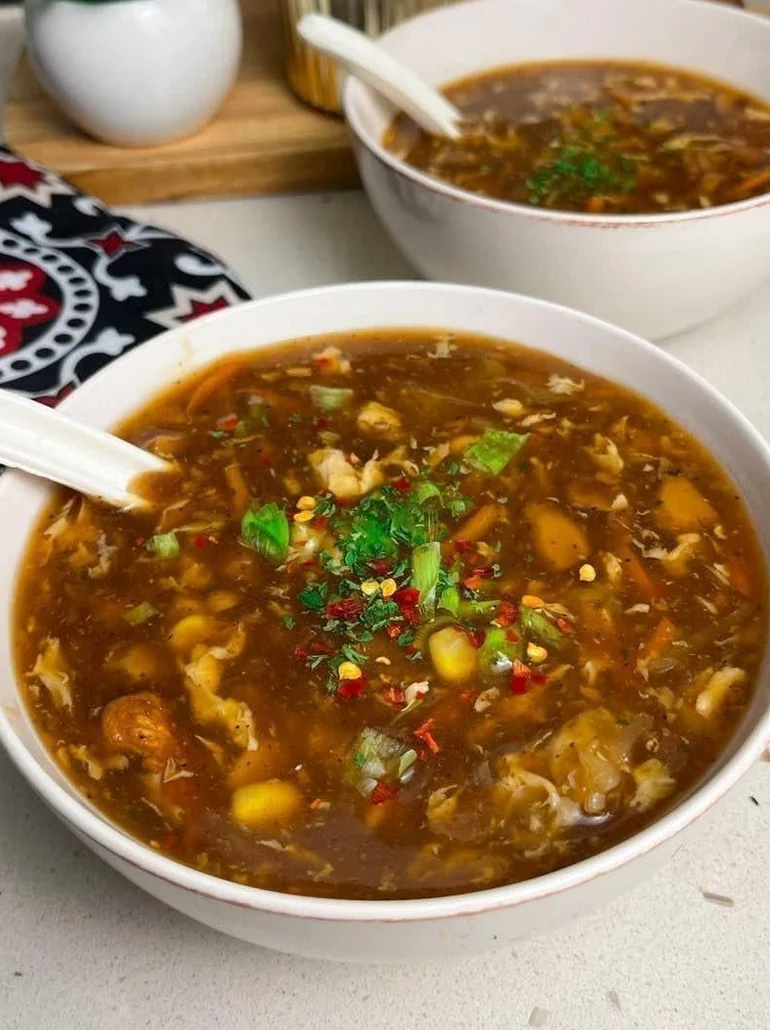
- The finished soup should have a pleasant aroma, a balanced tang, a savory broth, and a combination of tender and slightly crisp vegetables.
Step 13: Serve the Sour Soup
- Ladle the hot soup into individual bowls.
- Make sure each bowl contains a balanced amount of broth, mushrooms, vegetables, and chicken if included.
- Garnish with chopped spring onions, fresh coriander, or a small pinch of white pepper.
- Serve immediately while the soup is hot.
- Sour soup can be enjoyed on its own as a light meal, or alongside steamed rice, noodles, vegetable dumplings, or freshly prepared bread.
- If you are serving it as part of a larger meal, smaller bowls work well as a starter. For a more substantial lunch or dinner, add extra chicken, tofu, or noodles.
- Keep additional vinegar and chili sauce on the table so that everyone can adjust their bowl to their preferred taste.
Advertisement
Nutrition
Calories: without noodles, depending on the ingredients and portion size. Adding chicken, tofu, or noodles will increase the energy and · Protein: content. · Sodium: can vary considerably because soy sauce and
Advertisement