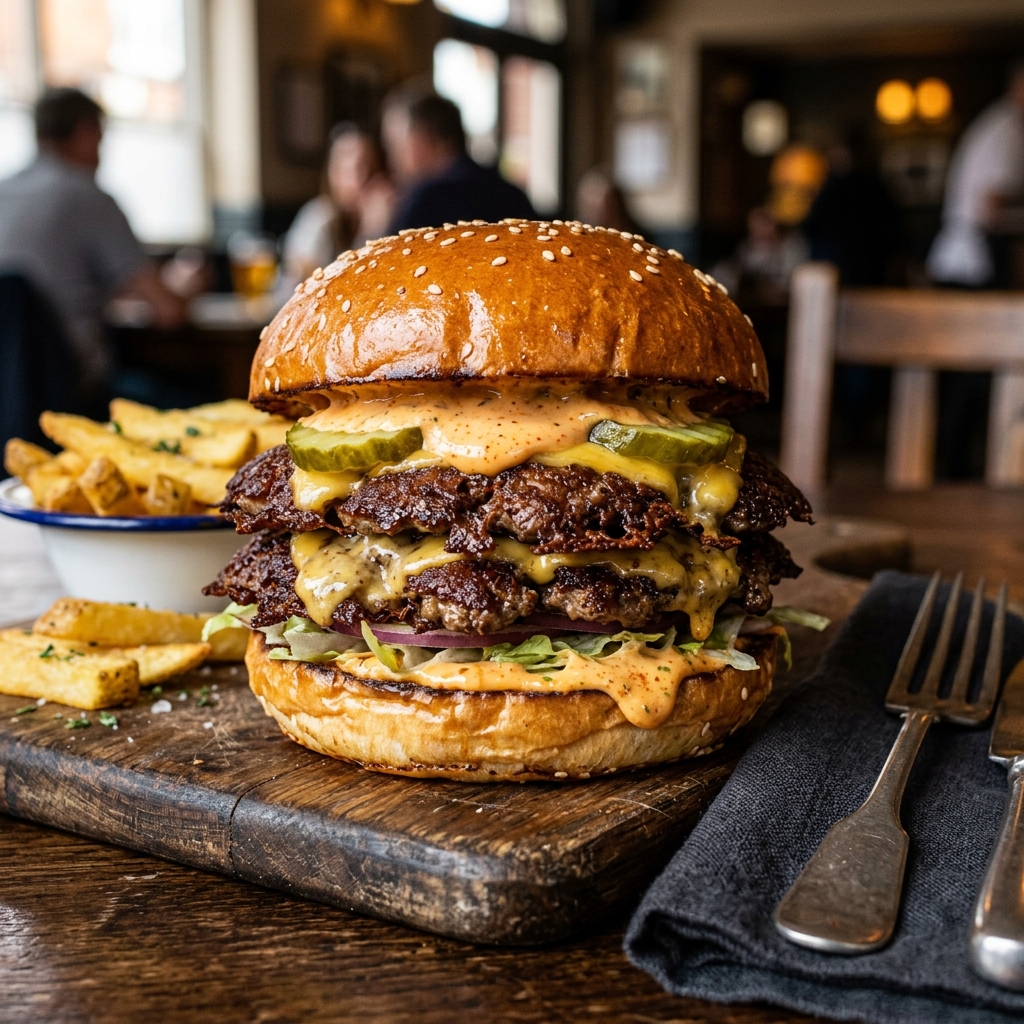
The Art of the Perfect Classic American Smash Burger
For decades, the standard backyard burger was a thick, grilled patty that was often dry in the center and lacked flavor on the outside. In recent years, however, the culinary world has embraced a different approach: the smash burger. By pressing a ball of ground beef flat onto a screaming hot griddle, you maximize the surface area that comes into direct contact with the heat. This triggers the Maillard reaction—a chemical reaction between amino acids and reducing sugars that creates a deep brown, crispy, and incredibly flavorful crust. The result is a burger that is crispy on the edges, juicy in the center, and packed with savory flavor.
The Science of the Maillard Reaction in Burgers
The secret to a great smash burger lies in the crust. To achieve those coveted crispy, lacy edges, you need to understand the physics and chemistry of smashing beef:
- Screaming Hot Surface: You need a heavy cast-iron skillet or griddle heated to at least 450°F (232°C). High heat is necessary to sear the beef instantly before the interior overcooks and dries out.
- High-Fat Beef: You must use 80/20 ground chuck (80% lean meat, 20% fat). Leaner beef will dry out immediately, while beef with more fat will shrink too much. The fat renders during cooking, frying the edges of the patty in its own juices to create that crispy texture.
- The “Smash” Timing: You must smash the beef immediately when it hits the hot pan. During the first 30 seconds of cooking, the fat is still solid and the juices are cold. Smashing now shapes the patty without losing moisture. If you smash the burger later, after the fat has melted and the meat has warmed, you will squeeze out all the juices, leaving you with a dry, cardboard-like patty.
- No Extra Oil: Do not oil the pan! You want the dry beef to stick to the dry metal surface. This sticking action is what allows the crust to form. The rendering fat will release the patty naturally when it is ready to flip.
Ingredients and Equipment
Unlike other recipes, the ingredient list here is short and simple, but the equipment is specific:
- Ground Chuck (80/20): Fresh, cold ground beef chuck. Do not use frozen or pre-formed patties.
- Buns: Soft brioche buns or potato rolls. Potato rolls (like Martin’s) are the classic choice because they are sweet, pillowy, and compress easily without tearing.
- Cheese: American cheese is the gold standard for smash burgers. It melts instantly and creates a creamy, cohesive bond between the patties. You can substitute with cheddar, but it will not melt as smoothly.
- Pickles: Dill pickle chips add a sour, crunchy acidity that cuts through the rich beef and cheese.
- Smash Sauce: A classic burger sauce made of mayonnaise, ketchup, yellow mustard, sweet relish, garlic powder, and a splash of pickle juice.
- Equipment: You will need a heavy cast-iron skillet or flat-top griddle, a sturdy flat metal spatula (with no slots), and a heavy press or jar to press down on the spatula.
Step-by-Step Instructions
Follow these steps carefully—timing is everything when making smash burgers:
Step 1: Prepare the Smash Sauce and Buns
In a small bowl, whisk together 1/2 cup of mayonnaise, 2 tablespoons of ketchup, 1 tablespoon of sweet pickle relish, 1 teaspoon of yellow mustard, 1/2 teaspoon of garlic powder, and a splash of dill pickle juice. Set aside. Slice your buns in half and spread a thin layer of softened butter on the cut sides. Toast the buns in a dry skillet over medium heat until they are golden brown and crispy on the edges. Toasting the buns creates a barrier that prevents the burger juices from making the bread soggy.
Step 2: Portion the Beef
Divide the cold ground beef into equal 3-ounce portions (about the size of a golf ball). Do not pack or press the meat together; handle it as gently as possible. You want the beef balls to be loose so that when they are smashed, the edges remain irregular and lacy. Keep the beef balls in the refrigerator until the moment they go into the pan—cold fat is essential for a good smash.
Step 3: Preheat the Pan
Place your cast-iron skillet or griddle over high heat. Let it heat up for 5-7 minutes until it is screaming hot and starting to smoke slightly. Do not add any oil or butter to the pan.
Step 4: The Smash
Place one or two beef balls onto the hot skillet, leaving plenty of space between them. Immediately place a square of parchment paper over the beef (this prevents the spatula from sticking to the meat). Using your heavy metal spatula and a press (or rolling pin) for leverage, press down on the beef ball with all your weight, flattening it into a thin patty (about 1/4-inch thick). The edges should look thin and irregular. Hold the press down firmly for 10 seconds to sear. Remove the parchment paper.
Step 5: Sear and Flip
Season the patty generously with kosher salt and black pepper. Let it cook undisturbed for 2 minutes. You will see the edges turn brown and crispy, and bubbles of juice rise to the surface. Using a sharp metal spatula, scrape firmly underneath the patty, ensuring you lift all of that caramelized brown crust off the pan. Flip the patty over. The flipped side should have a deep, mahogany-brown crust.
Step 6: Add Cheese and Assemble
Immediately place a slice of American cheese onto the hot patty. Cook for another 30-45 seconds just until the cheese begins to melt. If making a double, stack one cheesy patty on top of another. Transfer the patty stack directly onto the bottom bun prepped with a spoonful of smash sauce and pickle chips. Top with the top bun and serve immediately.
Chef’s Tips for Success
- Use a Sturdy Spatula: You need a spatula that will not bend when you press down on it. A flexible spatula will prevent you from applying enough pressure to get the patties thin.
- Keep the Beef Cold: Keep the beef balls in the fridge until the skillet is hot. Cold beef fat hitting a hot pan causes steam pockets that fluff up the meat while frying the edges, making them extra crispy.
- Firm Scrape: When it is time to flip, slide your spatula under the patty with a firm, fast scraping motion. If you scrape too gently, you will leave the delicious crispy crust stuck to the bottom of the pan.
Variations
- Oklahoma Fried Onion Burger: Immediately after placing the beef ball in the pan, press a handful of paper-thin sliced yellow onions onto the top of the beef before smashing. The onions will caramelize and steam directly into the beef as it cooks.
- Bacon Double Smash: Add two strips of crispy cooked bacon between the patties for a smoky crunch.
- Mushroom Swiss Smash: Swap the American cheese for Swiss cheese and top the burger with sautéed garlic mushrooms.
Storage and Reheating
Smash burgers are best enjoyed fresh out of the pan. The thin patties cook so fast that they do not store or reheat well, as they will dry out and lose their crispy edges. If you must store them, keep the cooked patties in an airtight container in the fridge for up to 2 days and reheat them quickly in a hot skillet for 1 minute per side.
FAQs
Why do my smash burgers shrink so much?
Beef shrinks when it cooks because the proteins tighten and release moisture and fat. Ground chuck (80/20) contains 20% fat, which renders out. Smashing the patty very thin and holding it down for 10 seconds helps lock the shape in place, minimizing shrinkage.
Can I use ground turkey?
While you can use ground turkey, it lacks the fat content of 80/20 beef chuck. Ground turkey will stick to the pan and dry out quickly without developing the same crispy crust. If you use turkey, you will need to add a splash of oil to the skillet.
What is the difference between a smash burger and a regular burger?
A regular burger is thick, juicy, and often cooked to a specific doneness (like medium or medium-rare). A smash burger is very thin, cooked quickly to well-done, and prioritizes a crispy, caramelized crust and lacy edges over interior juiciness.