Contents
EquipmentIngredientsThe Catfish & Wet MarinadeThe Signature Golden Cornmeal DredgeThe Frying MediumFor Serving & Table GarnishesCooking Intensities & Thermal StagesInstructions1. Prep the Fish2. Submerge in the Buttermilk-Mustard Wash3. Whisk the Cornmeal Coating4. Heat the Frying Oil5. Dredge with the Dry-Hand Technique6. Fry to Golden Perfection7. Drain on the Elevated Wire Rack8. Recover Oil and Repeat9. Garnish and ServeNutrition
Prep time15 minutes Buttermilk Brine Time 20 minutes (passive tenderizing) Fry Time 5 to 6 minutes per batch (approx. 15 minutes
Servings4 to 6 hearty
Equipment
- 12-inch deep cast iron skillet or 6-quart enameled Dutch oven
- Deep-fry or candy clip-on digital thermometer (non-negotiable for oil regulation)
- Long-handled stainless steel spider strainer or slotted fish spatula
- 2 wide, shallow pie dishes or breading trays
- Large rimmed baking sheet fitted with a wire elevated cooling rack
- Paper towels
Ingredients
The Catfish & Wet Marinade
- Fresh US Farm-Raised Catfish Fillets: 2 lbs (approx. 900 g), patted dry and trimmed (cut lengthwise into uniform strips or kept whole)
- Whole Buttermilk: 1 cup (240 ml) — the lactic acid cuts any river flavor and hydrates the flesh
- Yellow Mustard: 1.5 tablespoons (acts as an emulsifying flavor binder without tasting pungent)
- Louisiana Hot Sauce (Crystal or Frank’s): 1.5 tablespoons
- Fine Sea Salt: 1 teaspoon
- Black Pepper: 1/2 teaspoon
The Signature Golden Cornmeal Dredge
- Yellow Cornmeal (Fine to Medium Stone-Ground): 1 cup (150 g)
- All-Purpose Flour: 1/2 cup (60 g) — lightens the cornmeal to ensure a crisp rather than gritty bite
- Cornstarch: 1/4 cup (32 g) — creates micro-crisping bubbles in hot oil
- Cajun or Creole Seasoning (low-sodium): 1.5 tablespoons
- Garlic Powder: 1 teaspoon
- Onion Powder: 1 teaspoon
- Smoked Paprika: 1 teaspoon (imparts a deep auburn-gold tint)
- Dried Thyme: 1/2 teaspoon, rubbed between fingers
- Cayenne Pepper: 1/4 to 1/2 teaspoon (adjust for desired warmth)
- Freshly Cracked Black Pepper: 1/2 teaspoon
The Frying Medium
- High-Smoke Point Frying Oil: 3 to 4 cups (peanut oil is the gold standard for Southern fish fries; beef tallow, canola, or vegetable oil works equally well)
For Serving & Table Garnishes
- Fresh lemon wedges
- Chopped fresh Italian parsley
- Creamy homemade tartar sauce or spicy remoulade
- Warm hushpuppies and creamy coleslaw
Cooking Intensities & Thermal Stages
- Stage 1: Pre-Fry Oil Charging (Medium-High Heat, 375°F / 190°C): Heat oil 1.5 to 2 inches deep. The oil must be brought to 375°F (190°C) before adding the fish. The cold fish will drop the oil temperature by 10°F to 15°F, landing right at the ideal frying target of 365°F (185°C) .
- Stage 2: Active Convective Frying (Medium Heat, 350°F–365°F / 177°C–185°C): 5 to 6 minutes per batch. Maintain the flame so the oil bubbles vigorously around the fish without smoking or foaming over. If the oil drops below 340°F (171°C), the breading absorbs fat and turns greasy. If it rises past 380°F (193°C), the cornmeal scorches before the interior cooks through.
- Stage 3: Oil Recovery (High Heat): 2 minutes between batches. Allow the oil to return to 375°F before introducing the next batch.
- Stage 4: Elevated Rack Dehydration (Ambient Room Rest): Placing hot fried fish on paper towels creates trapped steam that softens the bottom crust within 90 seconds. Resting on an elevated wire rack keeps air circulating around all sides.
Advertisement
Instructions
1. Prep the Fish
- Rinse the catfish fillets under cold running water and inspect along the centerline for any stray pin bones. Pat them thoroughly dry with paper towels. Slice each fillet in half lengthwise down the natural muscle seam to create uniform, manageable strips that fry evenly.
2. Submerge in the Buttermilk-Mustard Wash
- In a wide, shallow bowl, whisk together the whole buttermilk, yellow mustard, hot sauce, fine sea salt, and black pepper until completely smooth. Submerge the catfish strips into the marinade, turning to coat. Let the fish rest in the liquid for 20 minutes at cool room temperature (or cover and refrigerate for up to 1 hour).
3. Whisk the Cornmeal Coating
- In a separate wide shallow dish, combine the yellow cornmeal, all-purpose flour, cornstarch, Cajun seasoning, garlic powder, onion powder, smoked paprika, dried thyme, cayenne, and cracked black pepper. Stir with a dry whisk until uniform in color.
4. Heat the Frying Oil
- Pour 1.5 to 2 inches of peanut or vegetable oil into your deep cast-iron skillet. Attach a deep-fry thermometer to the side, ensuring the bulb rests in the oil without touching the pan bottom. Set the burner to medium-high heat and slowly bring the oil to 375°F (190°C) .
5. Dredge with the Dry-Hand Technique
- Set up a wire cooling rack fitted over a rimmed baking sheet next to your breading dish.
- Lift one fillet from the buttermilk with your left hand, letting the excess marinade drip off for 3 seconds.
- Drop the wet fish into the cornmeal mixture.
- Use your dry right hand to scoop cornmeal over the fish and press down firmly so the coating packs into every fold. Flip and press again.
- Lift the fish, tap off loose, unbonded cornmeal, and place the fillet onto the wire rack.
- Repeat with remaining pieces. Let the breaded fish sit on the rack for 5 minutes before frying; this hydrates the starch and forms a cohesive crust that won’t flake off in the hot oil.
6. Fry to Golden Perfection
- Once the oil reaches 375°F (190°C), carefully lower 2 to 3 fillets into the pan using metal tongs, laying them gently away from you to prevent hot oil splatters. Do not overcrowd the pan.
- The oil temperature will drop to around 360°F–365°F. Adjust the burner flame as needed to keep the temperature steady between 350°F and 365°F (177°C–185°C) .
- Fry undisturbed for 3 minutes . As the crust sets, use your slotted fish spatula to gently flip the fillets over.
- Fry for an additional 2 to 3 minutes on the second side. The fish is ready when the bubbles subside slightly, the fillets float to the surface, and the crust turns a deep, sizzling golden brown with an internal temperature of 145°F (63°C) .
7. Drain on the Elevated Wire Rack
- Transfer the cooked fish using your spider strainer or tongs directly onto the elevated wire cooling rack. Do not drain directly on paper towels. Immediately sprinkle a light pinch of fine sea salt or Cajun seasoning over the sizzling hot fillets.
8. Recover Oil and Repeat
- Skim off any loose, burnt cornmeal bits floating in the oil using a small fine-mesh skimmer. Allow the oil to climb back up to 375°F (190°C) before dropping the next batch. Fry the remaining fish in batches following the same procedure.
9. Garnish and Serve
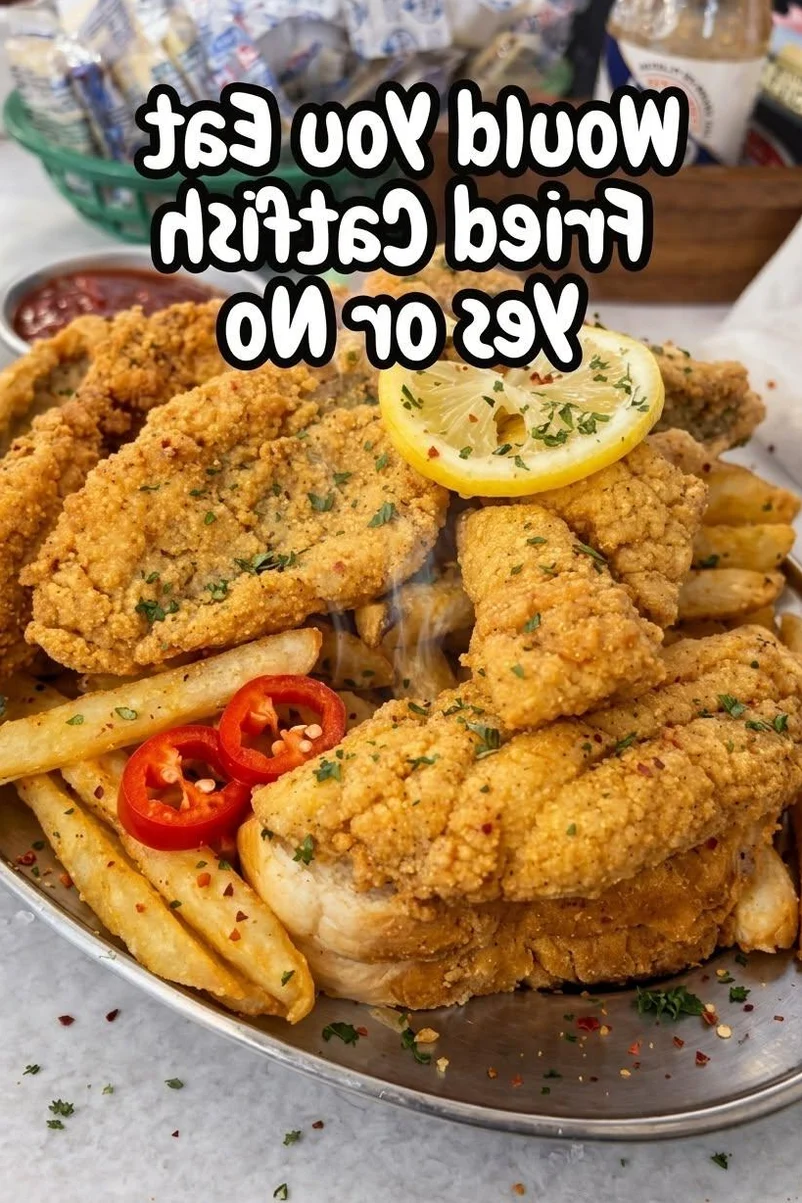
- Arrange the piping hot, crispy catfish on a serving platter. Scatter with chopped fresh parsley and tuck fresh lemon wedges around the edges. Serve immediately with chilled tartar sauce, spicy remoulade, hushpuppies, and cold sweet tea.
Advertisement
Nutrition
Calories: 385 kcal 19% · Protein: 31 g 62% · Fat: 18 g 23% · Carbohydrates: 24 g 9% Dietary · Saturated Fat: 3.5 g 18% · Fiber: 1.8 g 6% · Sugar: 2.2 g (from buttermilk) — · Sodium: 680 mg 30%
Advertisement