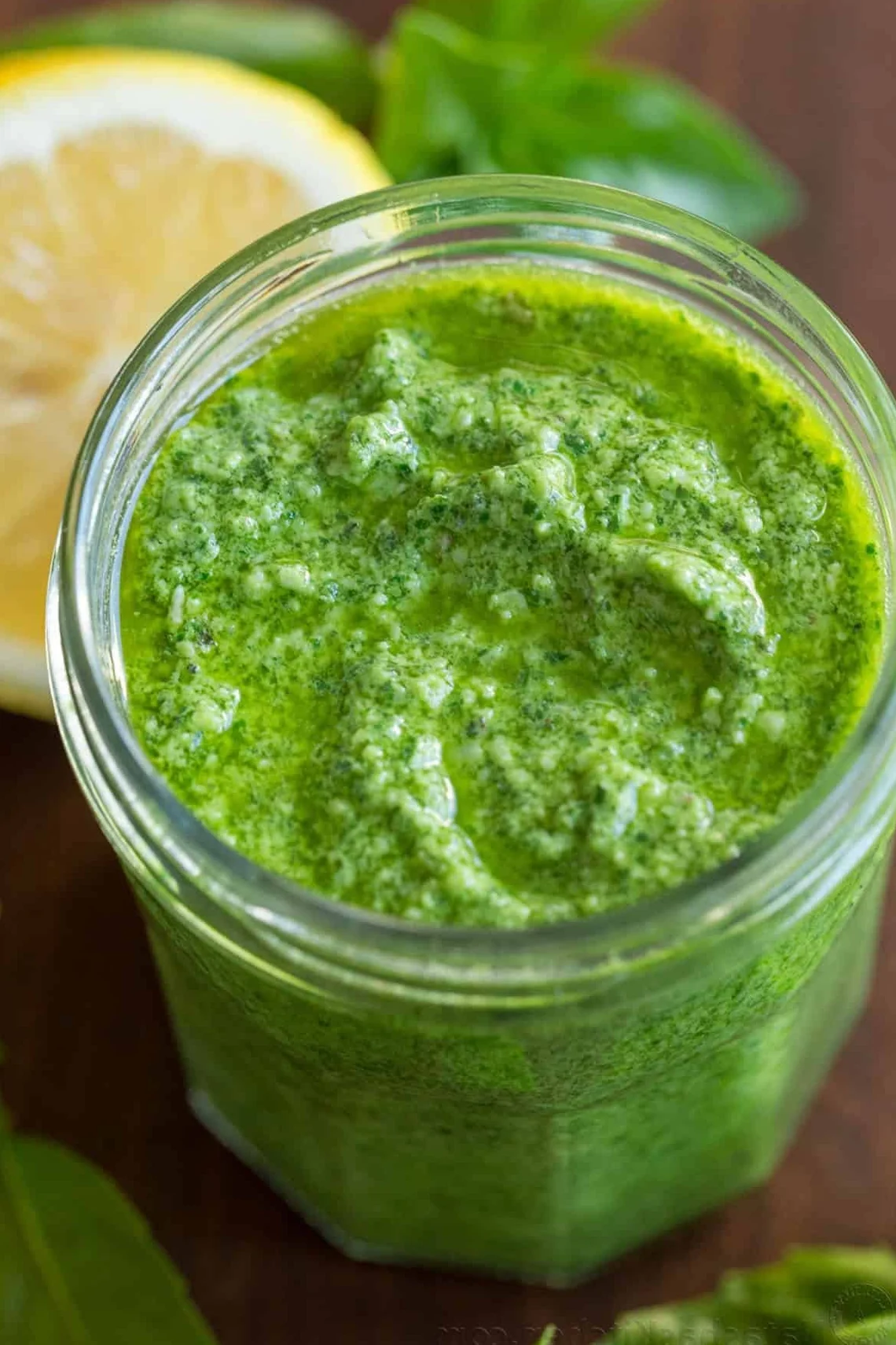
A traditional Ligurian sauce made with fresh Genovese basil, pine nuts, and aged cheeses, best prepared with a mortar and pestle for optimal texture and flavor.
Equipment
- A large marble or stone mortar
- a wooden pestle
- A food processor or high-powered blender
- a dry pan
- a clean kitchen towel
- a salad spinner
- a clean jar
- ice cube trays
- a freezer bag
Ingredients
- 100g (about 4 packed cups) fresh Genovese basil leaves
- 60g (½ cup) high-quality extra virgin olive oil (plus more for storage)
- 45g (⅓ cup) pine nuts (pinoli)
- 60g (⅔ cup) freshly grated Parmigiano-Reggiano cheese
- 30g (⅓ cup) freshly grated Pecorino Romano cheese (for authentic sharpness; you can use all Parmigiano for a milder taste)
- 1-2 small garlic cloves, peeled and crushed
- ½ teaspoon coarse sea salt (or to taste)
- A pinch of coarse sea salt for the mortar
Instructions
- Gently wash the basil leaves in cold water and pat them completely dry with a clean kitchen towel or use a salad spinner.
- Grate the cheeses.
- Lightly toast the pine nuts in a dry pan over low heat for 2-3 minutes until fragrant and just golden. Let them cool.
- In the mortar, add the garlic cloves and a generous pinch of coarse salt. Grind with a circular motion until a smooth paste forms.
- Add the cooled pine nuts and continue to crush them until you get a coarse, creamy paste.
- Add a small handful of dry basil leaves with another pinch of salt. Using a circular, grinding motion against the sides and bottom of the mortar, crush the leaves. Continue adding basil leaves in small batches, patiently grinding each batch before adding the next.
- Once all basil is incorporated and you have a thick green paste, add both grated cheeses. Mix thoroughly with the pestle until combined.
- Slowly drizzle in the extra virgin olive oil while stirring with the pestle in a circular motion, allowing the sauce to emulsify and become fluid.
- Taste and adjust salt if needed.
- To serve immediately, mix with al dente pasta (like trofie, trenette, or linguine) along with a splash of the pasta cooking water to create a silky sauce that clings to every strand.
- To store, transfer the pesto to a clean jar and press it down with the back of a spoon to eliminate air bubbles. Pour a thin layer of extra virgin olive oil over the top to seal out air. Cover tightly and refrigerate for up to 1 week.
- For longer storage, freeze in ice cube trays, then transfer the frozen cubes to a freezer bag for up to 3 months.
Notes
Use the youngest, most vibrant Genovese basil you can find. Avoid any leaves with black spots or a minty scent. No Pine Nuts? Substitute with blanched almonds or walnuts for a different, but still delicious, profile. Dairy-Free/Vegan Option: Omit the cheese and add 1-2 tablespoons of nutritional yeast and an extra pinch of salt for a savory, “cheesy” flavor. For a Lighter Pesto: You can reduce the oil slightly, but note it will affect the sauce’s creaminess and preservation. Preventing Browning: The mortar method and the oil-layer storage technique are your best defenses against the pesto turning brown.
Nutrition
Calories: ~170 kcal · Total Fat: 16g · Saturated Fat: 3.5g · Cholesterol: 10mg · Sodium: 250mg (varies with cheese and salt) · Total Carbohydrates: 2g · Dietary Fiber: 0.5g · Sugars: 0.5g · Protein: 6g